
Operating System
Cyber threats evolve daily, but strong internal safeguards remain your first line of defense. These 10 proven strategies help cybersecurity leaders build a resilient data protection framework that adapts to modern risks while maintaining operational efficiency.
Role-Based Access Control Implementation

Cyberattacks often exploit over-permissioned accounts—role-based access control (RBAC) stops them by tying permissions to job functions, not individual users. This simple shift eliminates the "admin for everyone" trap that fuels lateral movement during breaches.
Modern RBAC systems like Microsoft Azure AD or Okta let you define granular roles (e.g., "FinanceApprover" or "DevReadOnly") that sync across applications. The least-privilege principle ensures employees only access what’s necessary—cutting attack surfaces by up to 70% in real-world deployments. Integration with SIEM tools adds real-time monitoring for suspicious role changes.
Perfect for mid-sized teams where IT overhead is a concern, RBAC scales from cloud apps to legacy systems. Start with three core roles (Admin, Standard, Guest) and refine as you go—security that actually works for your workflow. ✨
Automated Data Encryption Policies

If your company handles personally identifiable information (PII) or financial records, automated data encryption policies aren’t just a best practice—they’re a compliance necessity. Unlike manual encryption, these systems apply real-time encryption to databases, emails, and file transfers without disrupting workflows, ensuring sensitive data stays locked down whether it’s stored or moving across networks.
Modern solutions like Symantec Encryption Desktop or Microsoft Azure Information Protection integrate seamlessly with existing infrastructure, offering AES-256 encryption by default and granular access controls for decryption keys. For industries under GDPR, HIPAA, or PCI DSS, these policies automate compliance by enforcing encryption standards across all endpoints—eliminating human error in data protection. Audit logs track every access attempt, providing a paper trail for regulators.
This safeguard is a must for healthcare providers, fintech firms, and legal offices where data breaches carry severe penalties. Even smaller businesses handling customer data benefit from the zero-configuration security these policies deliver. ✨
Endpoint Detection and Response Systems

When employees connect from laptops in coffee shops or tablets at home, you need more than just firewalls—you need real-time visibility into every endpoint. Endpoint Detection and Response (EDR) systems like CrowdStrike Falcon or SentinelOne monitor device activity 24/7, blocking malware before it executes and stopping data leaks in their tracks.
These solutions go beyond traditional antivirus by using AI-driven behavioral analysis to detect zero-day threats, while automated response actions isolate compromised devices instantly. For remote teams, cross-platform support (Windows, macOS, Linux, and even mobile) ensures consistent protection across all devices—no matter where they’re used.
Perfect for organizations with hybrid workforces or BYOD policies, EDR transforms passive security into an active defense. 💻
Insider Threat Detection Framework

Not all threats come from outside your firewall—sometimes, the biggest risks walk into work every morning. An Insider Threat Detection Framework uses machine learning-driven behavioral analytics to spot unusual patterns before they become breaches, whether from careless mistakes or malicious intent.
These frameworks analyze user activity baselines—like sudden data downloads, late-night logins, or unusual access requests—to flag anomalies in real time. Solutions like Splunk User Behavior Analytics or Exabeam integrate with existing SIEM tools, requiring minimal setup while delivering 90%+ accuracy in threat detection. The key? Context-aware alerts that distinguish between a developer running tests at 2 AM and an actual breach attempt.
Perfect for financial institutions, healthcare providers, or any org handling sensitive IP, this approach fills the gap left by traditional perimeter defenses. It’s not about distrust—it’s about protecting your crown jewels before they’re exposed. ✨
Secure File Sharing Protocols
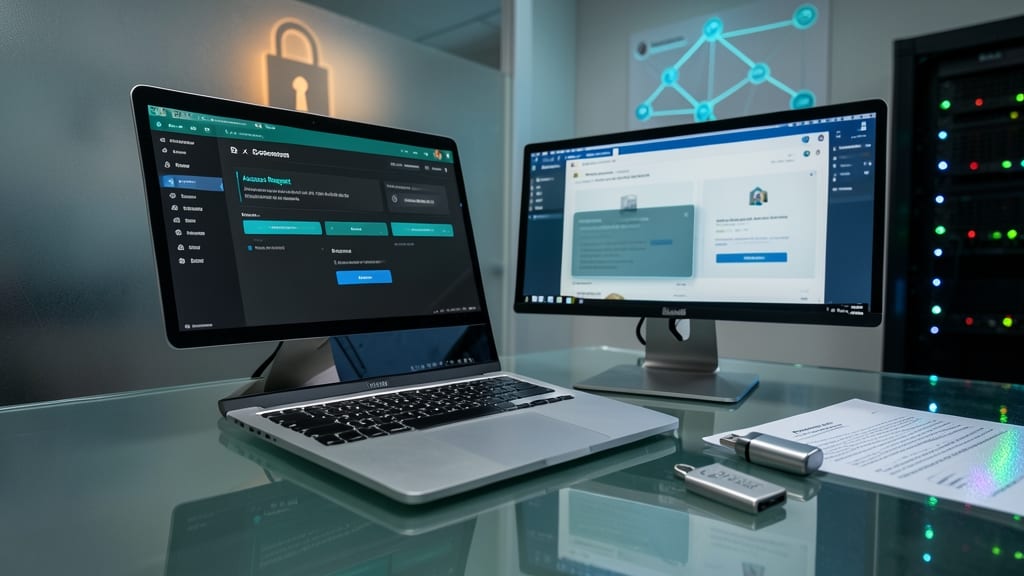
Tired of accidentally sharing sensitive documents with the wrong team? Secure file-sharing protocols like Box Governance or Microsoft Purview Message Encryption enforce zero-trust principles by default—meaning every access request is treated as a potential threat until verified.
These systems go beyond basic permissions by implementing granular controls (e.g., time-bound access, device compliance checks) and immutable audit trails that log every interaction. For example, Okta’s Universal Directory integrates with tools like Dropbox to require multi-factor authentication before files are even viewed, while Cisco Secure File Transfer adds end-to-end encryption for external collaborations. The result? Even if credentials are compromised, attackers can’t exfiltrate data without triggering alerts.
Perfect for legal, finance, or healthcare teams handling confidential contracts or patient records, these protocols reduce compliance risks while keeping workflows smooth. 💻
Network Segmentation Architecture

When a breach happens, every second counts—especially in industries like finance or healthcare where stolen data means massive compliance fines and reputational damage. Network segmentation architecture acts like a digital moat, isolating critical systems so attackers can’t jump from one compromised machine to your entire network.
This approach divides your network into micro-segments (like DMZs for cloud workloads or VLANs for on-premises), enforcing strict firewall rules between zones. For example, a hospital’s patient records might sit in a zero-trust segment with no direct access from the HR network, while a bank’s transaction servers could be locked behind a multi-layered perimeter. Tools like Cisco ACI or VMware NSX automate this with software-defined policies, reducing manual configuration errors.
Ideal for organizations handling HIPAA-regulated data or PCI-DSS compliance, segmentation turns a full-blown breach into a contained incident. The result? Limited lateral movement for attackers and faster recovery times for your team. ✨
Continuous Vulnerability Assessment

When your IT environment changes faster than you can say "patch Tuesday," continuous vulnerability assessment keeps your defenses ahead of threats. Unlike traditional scans that run monthly (or worse, annually), this proactive approach uses AI-driven tools to detect and prioritize vulnerabilities in real-time—before attackers can exploit them.
Solutions like Tenable.io or Qualys VMDR provide automated, continuous scanning across networks, endpoints, and cloud assets, with risk scoring that aligns with business impact. They integrate with ticketing systems to auto-generate remediation tasks, reducing manual workload by up to 70%. For organizations with cloud migrations, DevOps pipelines, or frequent software updates, this means no more blind spots in your security posture.
This is the ideal safeguard for tech-forward companies where infrastructure evolves daily—like SaaS providers or fintech startups. The key? Prioritize fixes based on exploitability, not just severity, to focus resources where they matter most. ✨
Secure Remote Access Solutions

With remote work becoming the norm, traditional VPNs alone aren’t enough to keep company data safe. Modern secure remote access solutions combine multi-factor authentication (MFA) with zero-trust principles to verify every connection—even from unmanaged devices.
Platforms like Cloudflare Access or Zscaler Private Access eliminate VPNs entirely, replacing them with identity-based access controls that grant permissions per session. They also integrate with SAML 2.0 and OAuth 2.0 for seamless SSO, while FIDO2 hardware keys add an extra layer of protection against credential theft. For hybrid teams, these tools reduce the attack surface by 90% compared to legacy VPNs.
Ideal for organizations with global teams or contractors, these solutions let IT enforce granular policies without sacrificing user experience. Perfect for finance, healthcare, or any industry handling sensitive data. ✨
Incident Response Playbooks

When a breach hits, every second counts—but without a clear plan, your team may scramble, leaving critical systems exposed. Incident Response Playbooks turn chaos into action by outlining step-by-step procedures for detecting, containing, and recovering from cyberattacks, ensuring compliance deadlines are met and PR fallout is minimized.
These playbooks include pre-mapped roles (e.g., who isolates infected systems, who notifies regulators), automated escalation triggers (like failed login spikes), and template communications for stakeholders. Tools like Splunk’s IR Playbooks or IBM’s Resilient integrate with your SIEM, pulling real-time data to guide decisions—no guesswork required.
Ideal for financial firms (where regulatory fines loom) or healthcare providers (handling HIPAA-sensitive data), these playbooks also help PR-sensitive brands contain breaches before headlines spread. The result? Faster containment, clearer accountability, and less damage when the inevitable happens. ✨
Security Awareness Training Programs

Over 60% of data breaches start with a phishing email—yet most companies still overlook the weakest link: their employees. Security Awareness Training Programs bridge this gap by turning staff into proactive defenders through interactive simulations and real-world education.
Platforms like KnowBe4 or SANS Security Awareness deliver customized phishing simulations (e.g., fake login pages, malicious attachments) to test and train employees, while gamified modules (like "Security Adventure") make learning engaging. Metrics like click-through rates and training completion help track progress, with automated follow-ups for repeated mistakes. These programs often integrate with SIEM tools to correlate training results with actual threat patterns.
Ideal for SMBs to enterprises, this approach is cost-effective compared to breach cleanup—especially for industries like healthcare or finance where compliance mandates employee training. Start with a quarterly phishing test and annual deep-dive workshops for a battle-tested setup. ✨